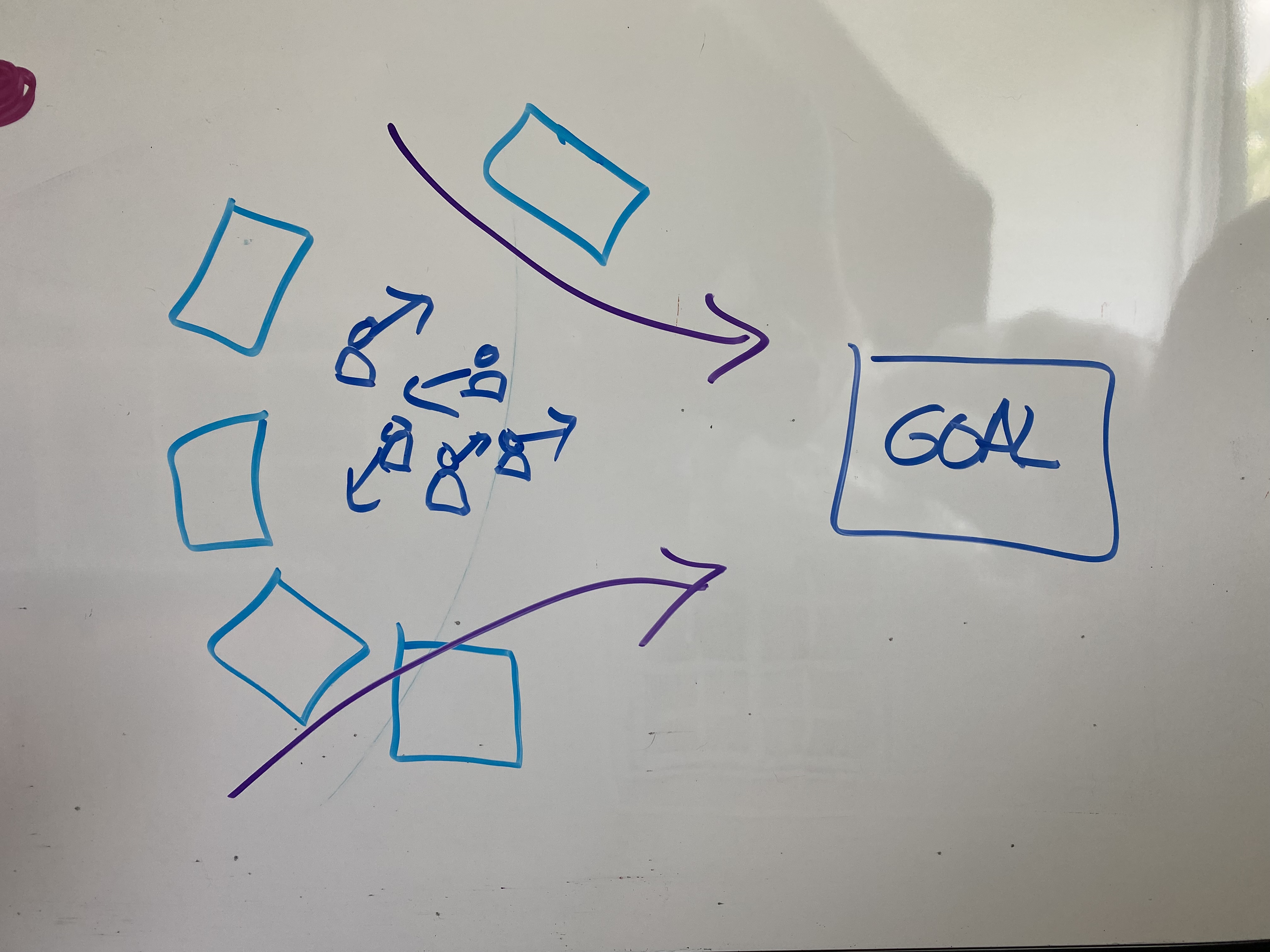
Forethought
How anticipation, planning, and preparation reduce future friction.
System Design Methodology
A repeatable process identifies needs, designs scalable systems, operationalizes them, trains others, and iterates through feedback loops.

A repeatable process identifies needs, designs scalable systems, operationalizes them, trains others, and iterates through feedback loops.
This domain is valuable because it makes meaning itself legible as a system. Information has to be structured, sequenced, distributed, interpreted, and reinforced before it changes what people do.
That transfer matters across nearly everything else. Better narrative, knowledge, and communication design usually make technical, organizational, and commercial systems easier to adopt and sustain. This domain gets more useful when it is compared with adjacent systems instead of being treated as a silo. That is where reusable judgment starts to form.
How anticipation, planning, and preparation reduce future friction.
Choosing the right problems to solve in the right part of a market.
How the effective use of tools can expand output, speed, and quality.
How entering less crowded territory can increase upside and reduce resistance.
How responsiveness and availability can create trust, momentum, and advantage.

How the right depth of understanding can differentiate judgment and capability.
How the right mix of activities can increase overall productivity and resilience.

How reputation, positioning, and public signal affect opportunity.
How attention, demeanor, and engagement shape influence and communication.
How access to resource-rich environments can shape opportunity and economics.