
People I like
This page includes people whose lives, work, character, or imagination have shaped how I think.
Section
I'm a systems builder working across technology, operations, and ventures. The person behind the work, the through-line, and how I work with people.
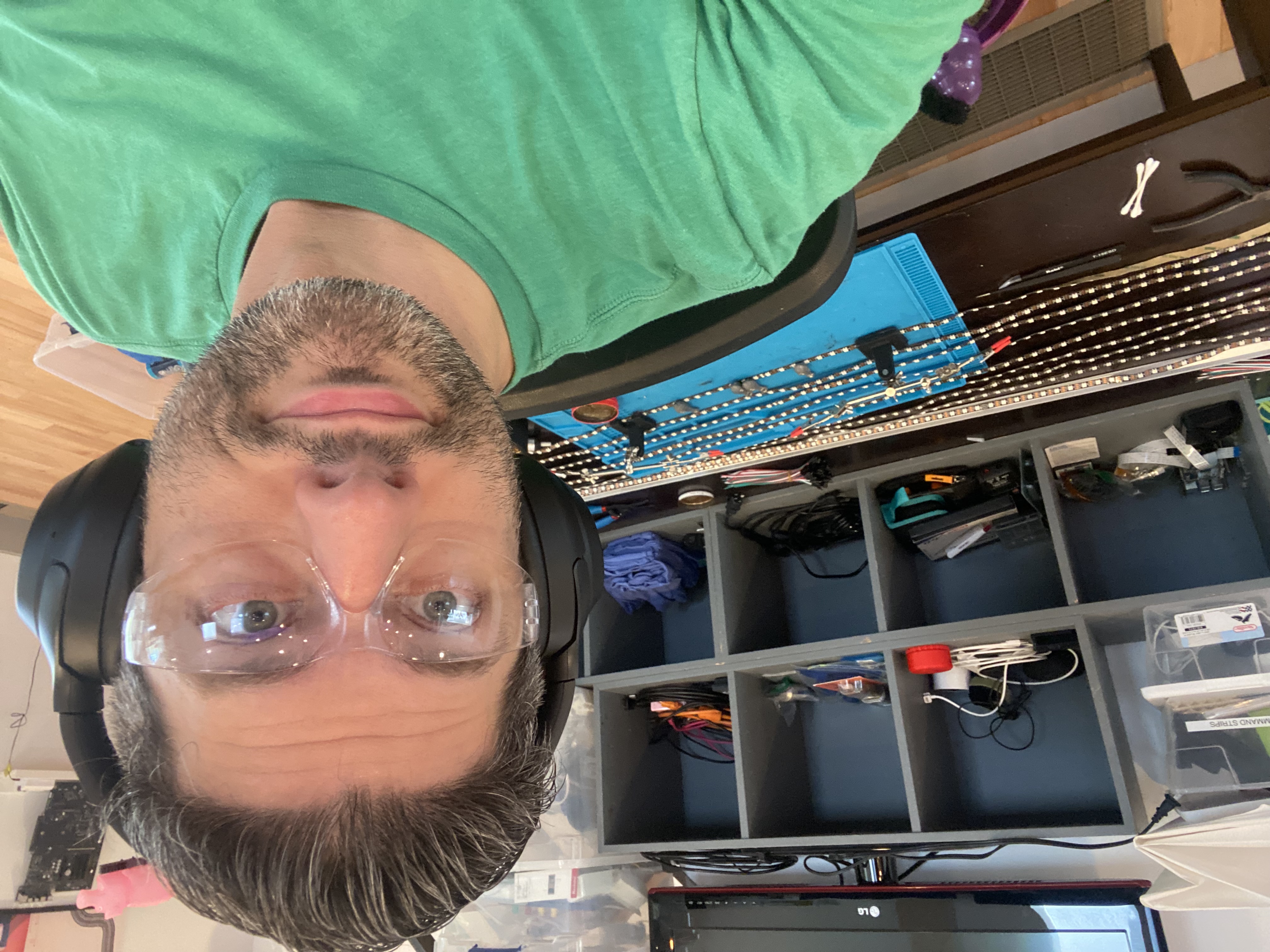
I am a systems builder working across technology, operations, ventures, and long-horizon structures.
Most often, that means stepping into situations where the real problem is not only technical and not only organizational. The work is usually about making complexity legible enough that people can decide, align, build, and keep moving.
That pattern has shown up through cloud and data architecture, operational design, venture execution, knowledge systems, writing, and the structures that help people and organizations do more than they could do alone.
If you would rather hear it than read it: three minutes on what I do, how an engagement starts, and what success looks like — recorded in a St. Louis studio session in late 2021.
My name is Michael Orlando, and I help people build products with technology.
A lot of my customers that come to me need help solving some theoretical technical decision — so this is team guidance on which tools to use. They need to know how to use a new tool: they might know what they want — they want to use Athena, they want to use Tableau — but they don’t know how to do it, and they need special training for their team. Or they just need the answer: they need to know, “okay, we have this data — why are our customers no longer buying this product and instead buying that other product?” Because I know about the data engineering, the data science, and other infrastructure tools, and how to help manage teams, I package that all together and try to enable the existing team to be able to do the things that they can’t do today.
I am based in St. Louis, Missouri — I’m in the Midwest. I work a lot with US-based companies because, practically speaking, we can communicate very easily. That ends up being one of the most important things: I understand what you’re saying, and I am culturally aware of how to ask questions that sometimes are hard to ask. I’m a US citizen, I’m findable, we’re under the same legal system — so you have some additional protections to know that I’m not going to run off and copy your product and try to build my own business.
Generally speaking, when I’m working with a new client — we don’t know each other yet — we’ll have some kind of call to discuss what your problem is, where you want help, and what I do, what I know, what I’ve done in the past, and how we can help each other. We both have to make a decision that it’s going to make sense to try to work together. If that’s the case, then there’s usually some sort of team integration or product integration call, and then we’ll set up some sort of regular cadence depending on what your schedule is — if you need a weekly thing, if you need a monthly thing, we can synchronize on when to show you what I’ve done. And then it’s pretty agile from there.
Success to me, in a consultant-client relationship, is that that client has high confidence in what they now know. They were very curious and didn’t understand, when they started, the problem that they came to me with — and that lack of knowledge about how to solve it ends up going away entirely. They know what tool they’re using, they know why they’re using it, they have some kind of outcome — they have an answer, they have a number.
Once I have a good understanding of what you want out of this engagement, I’ll be able to tell you if I’ve done things that are similar in the past. You can ask any questions, you can expose all of your concerns, listen to my answers — and if that works and we’re both satisfied, we can get started.
The through-line is not breadth for its own sake. It is a bias toward creating clarity where ambiguity is expensive: in systems, teams, ventures, and decisions that affect real work.
This site is not meant to be a full resume or a firm brochure. It is a public trust-and-routing layer: enough story to understand the person, enough proof to support diligence, and enough structure to help different audiences find the right next step.
One useful frame for the work is four recurring pillars:
I tend to be most useful when one or more of these conditions are true:
I am less useful when the ask is vague, the trust level is low, the problem is mostly performative, or the work only needs a narrow pair of hands with no systems context.
The work is strongest when it combines:
If you want the clearest public statement of the values and decision filters behind that style, read Operating Philosophy.
If you want evidence before more story, these are good starting points:
Much of the public work currently becomes visible through AspirationalX, the execution and venture-support side of the work.
That matters because it shows where the work is visible right now, but it is not the whole identity. This site is still about the person, the pattern, and the broader body of work.
This page includes people whose lives, work, character, or imagination have shaped how I think.

This section gathers the pages that offer a clearer view into how I think, what has shaped me, what I value, and what I am moving toward.
How the tools, services, practices, and supports that make up my personal stack.
A hub for the channels, formats, and public-facing surfaces where I publish, appear, and stay visible.
Probing Queries and Their Reasons: A compilation of pressing questions and the rationale behind them. This section is dedicated to exploring the 'whys' that...
This section captures how I think through ideas, questions, and experiences over time.
A hub for formative stories, unresolved questions, and reflective pages that have shaped how I think.
A hub for how I think about people, connection, support, and long-term relationships.
Fascinating Theories and Concepts: Explore the theories and ideas that captivate my intellect and influence my thinking.

This page is for the things I am actively seeking in life, work, and experience.