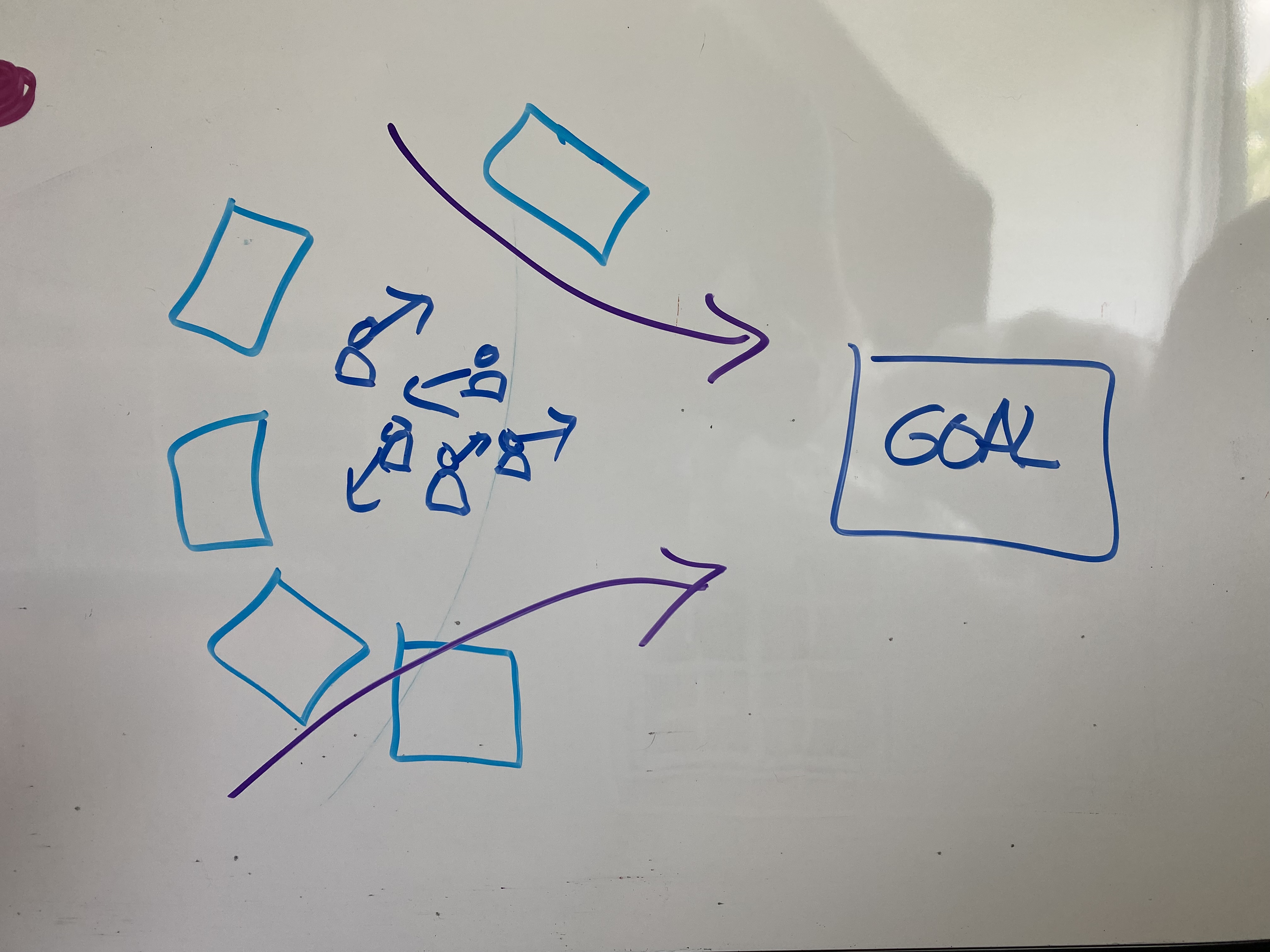
Multi-project coordination systems
Frameworks manage multiple concurrent efforts with shared resources, overlapping timelines, and interdependent decisions.
Leadership
Leadership is the ability to guide individuals or teams toward achieving goals.

Leadership is the ability to guide individuals or teams toward achieving goals. On this site, it matters because it transfers across technical, operational, and venture work instead of staying trapped in one narrow context.
Learn more: https://en.wikipedia.org/wiki/Leadership
Frameworks manage multiple concurrent efforts with shared resources, overlapping timelines, and interdependent decisions.
Structured coordination frameworks decompose goals into tasks, track dependencies, and manage execution over time using tools, priorities, and feedback cycles.

Organizations are designed to discover and scale product-market fit by aligning capital, talent, and execution under uncertainty with staged risk and feedback loops.

Groups of individuals organized around shared objectives develop roles, communication patterns, and lifecycle stages from formation through performance and dissolution.
Systems ensure stakeholders such as partners, teams, and investors share a common understanding of goals, roles, timelines, and outcomes.
Projects founding and building companies, products, and platforms from zero to market.
Structured approaches evaluate options and select actions under uncertainty.
Structures define roles, responsibilities, and reporting relationships to improve coordination and decision-making.
What I mean by “founder mindset,” why it’s valuable, and the receipts across my ventures that show I’ve run the full business cycle — repeatedly.
Frameworks guide ventures from idea to validation to scaling to operation to exit or continuation.