Duesy
A youth sports ticketing and gate platform where I lead cloud infrastructure and reliability.
Cloud Infrastructure
Cloud Infrastructure is the foundational components required to build and operate cloud-based systems.
Cloud Infrastructure is the foundational components required to build and operate cloud-based systems. On this site, it matters because it transfers across technical, operational, and venture work instead of staying trapped in one narrow context.
Learn more: https://en.wikipedia.org/wiki/Cloud_computing
“Knowing how these systems work with other systems, and which tools and sub-products should be chosen and not used — that’s a big part of it. I can steer clients away from technology that looks like it might work but won’t actually work for their application.” Full transcript on the AWS page.
A youth sports ticketing and gate platform where I lead cloud infrastructure and reliability.
Cloud infrastructure and reliability for a youth-sports ticketing platform, where weekend traffic spikes meet a serverless architecture and a gate that cannot fail.
GitLab is a platform for version control, CI/CD, and DevOps workflows.
Helm is a package manager for Kubernetes applications.
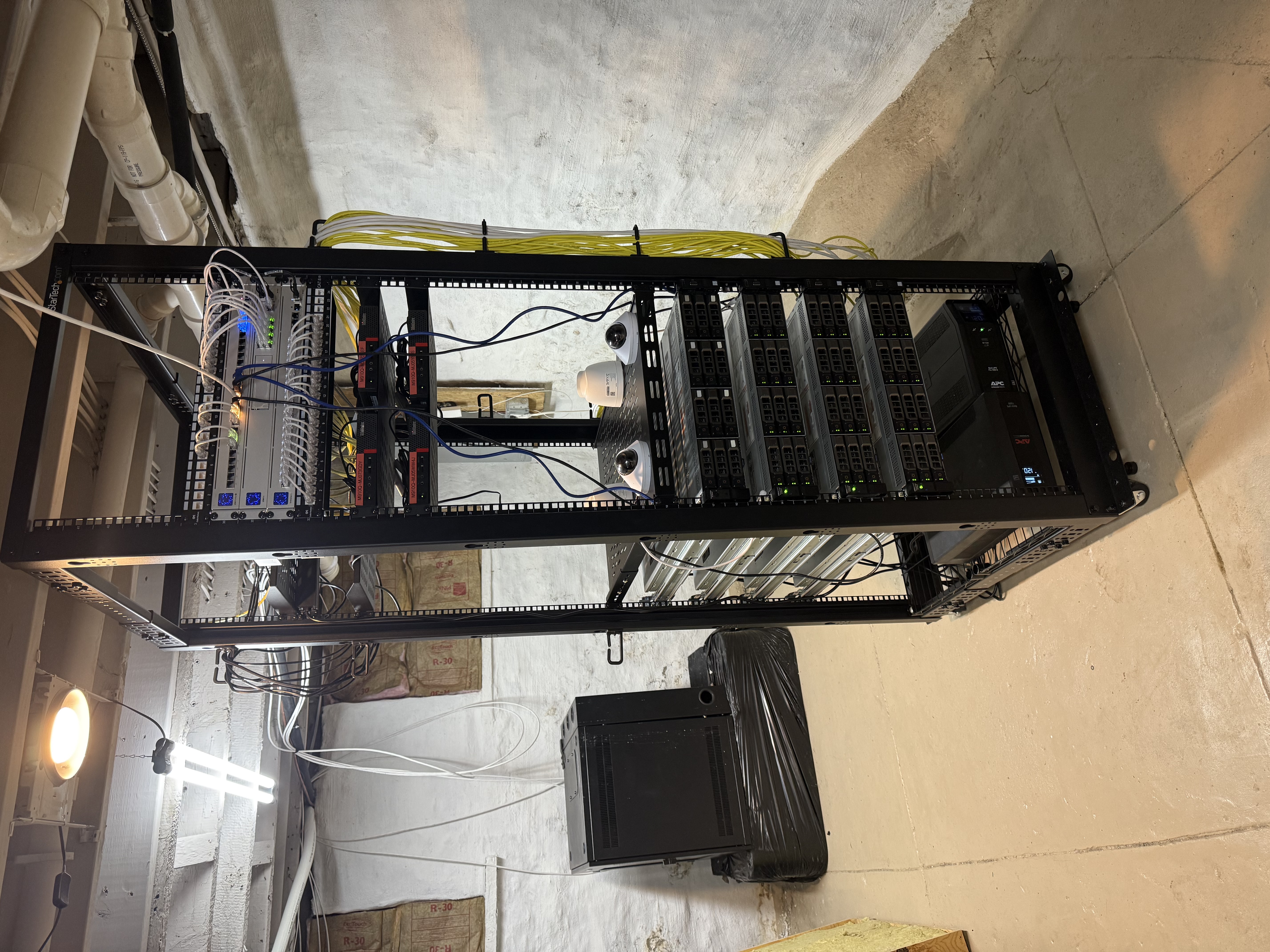
My homelab is both a workshop and a proving ground.
Container orchestration platforms schedule workloads, manage service discovery, and enforce desired state across clusters of compute resources.
Revised the 2014 container platform in 2018 onto EKS, ArgoCD, Helm, and GitHub Actions — moving from hand-run deployments to declarative, GitOps-driven delivery.
NGINX is a web server and reverse proxy for high-performance applications.
Built and ran a self-hosted photo sharing platform before cloud storage made it trivial — covering web dev, storage, auth, and the enduring question of how to make a growing photo library actually useful.
A 4-node Proxmox cluster running Kubernetes, Ceph, site-to-site VPNs to AWS, GitOps pipelines, and a full observability stack — built to test every architecture I recommend to clients.