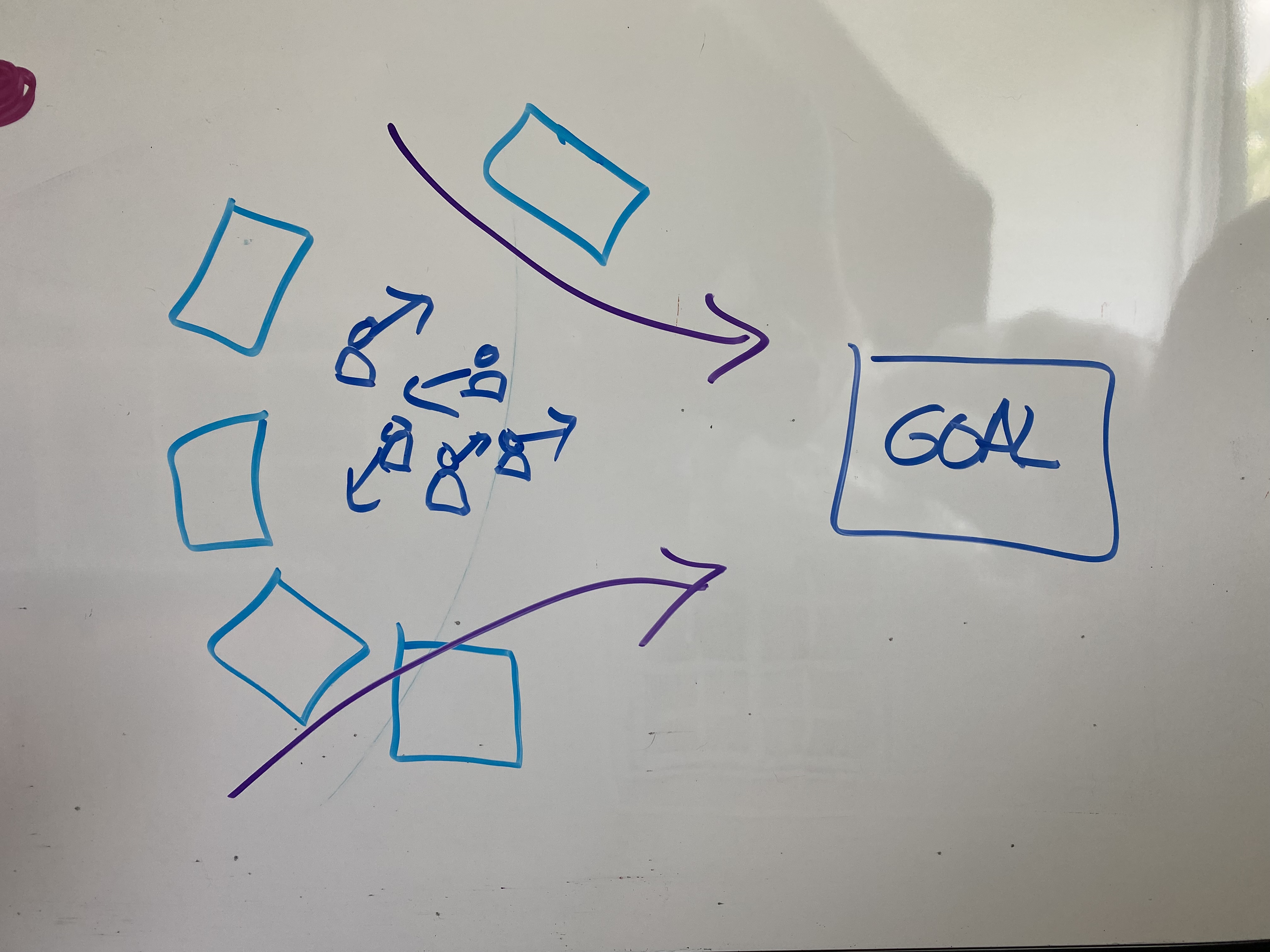
Overview
A multi-year initiative to scale a cloud-native, serverless loan management platform on AWS for a student and consumer debt company. Wrote Architecture Decision Records, led cross-team coordination across 70 engineers, and built a data-driven scaling roadmap covering FinOps, security posture, CI/CD improvements, and organizational architecture.
Context
A Fortune 1000 student and consumer loan servicer had built a cloud-native, serverless system to manage millions of loans, and was expanding it into a software-as-a-service platform for major financial institutions. The growth target was concrete: the platform needed a credible, executable plan to support millions of active loans while meeting contractual SLAs and holding per-loan costs within a strict ceiling.
I was engaged through AspirationalX to provide deep technical expertise and project management for the scaling initiative. The architecture and the teams were strong. The problem was not weakness — it was that nobody could yet say, with evidence, where the system would break first.
Working with solution architects, domain experts, and product managers, we identified five specific threats to scaling:
- Data inaccuracies that generated excessive manual rework
- Timeouts cascading across services and compounding errors
- Inconsistent observability tooling that made troubleshooting slow and unreliable
- Data inconsistencies introduced by retries and parallel processing
- Batch processes that could fail to meet volume and SLA demands
The System
The work was less about writing code and more about building a system that could turn an ambiguous mandate — “make sure this scales” — into prioritized, verifiable execution across roughly 70 engineers:
- Discovery before prescriptions. I reviewed the architecture, the AWS footprint, and the observability stack, and ran interviews and knowledge-sharing sessions with the engineering teams. Scaling blockers were documented as findings with evidence, not opinions.
- Risks quantified in business terms. Each threat was validated with technical and business stakeholders and expressed in terms of performance, cost, and contractual compliance — the units leadership actually makes decisions in.
- Architecture Decision Records. I drafted and promoted ADRs to codify serverless and AWS practices, so decisions survived beyond the meeting where they were made and new teams inherited reasoning, not just rules.
- A dedicated solution-architecture backlog. Scaling initiatives were organized into workstreams in their own tracked project, with dependencies and timelines mapped, so the effort competed for attention as a first-class program rather than a side quest.
- A steady coordination cadence. Recurring cross-team check-ins three times a week kept alignment and momentum, backed by dashboards, point-in-time assessments, and regular reporting for leadership.
Outcomes
- A structured, tracked roadmap to millions of active loans was defined and actively executed — with scaling threats addressed before they became production incidents.
- Executives gained continuous visibility into progress, risks, and outcomes, which changed the conversation from reassurance to evidence.
- Engineering and product teams aligned on shared priorities, reducing wasted effort across the program.
- The ADR layer became durable infrastructure: decisions and their reasoning remained legible to teams that joined later.
Artifacts
The working artifacts from this engagement — the ADRs, the dashboards, the scaling roadmap — belong to the client and stay there. The trade-off is simple: showing you a client’s dashboard would prove the work and disprove the judgment. What you can check instead: the engagement came through AspirationalX, my consulting record is publicly verified at Upwork’s highest tier (Expert-Vetted), and the methods described above are documented in the open in From Ambiguity To Operational Systems.
Patterns Worth Reusing
- Map the system before fixing it. The highest-leverage early deliverable was not a fix — it was a validated list of where the system would break first, in cost and compliance terms.
- Codify decisions, not just solutions. ADRs turned individual judgment into organizational capability. That is what makes scale survivable without heroics.
- Make progress legible. Dashboards, cadence, and point-in-time assessments converted a high-stakes, ambiguous program into something leadership could trust and teams could act on.
- Scaling ceilings are organizational and technical at once. Every one of the five threats had both an architecture component and a process component. Solving either alone would not have worked.