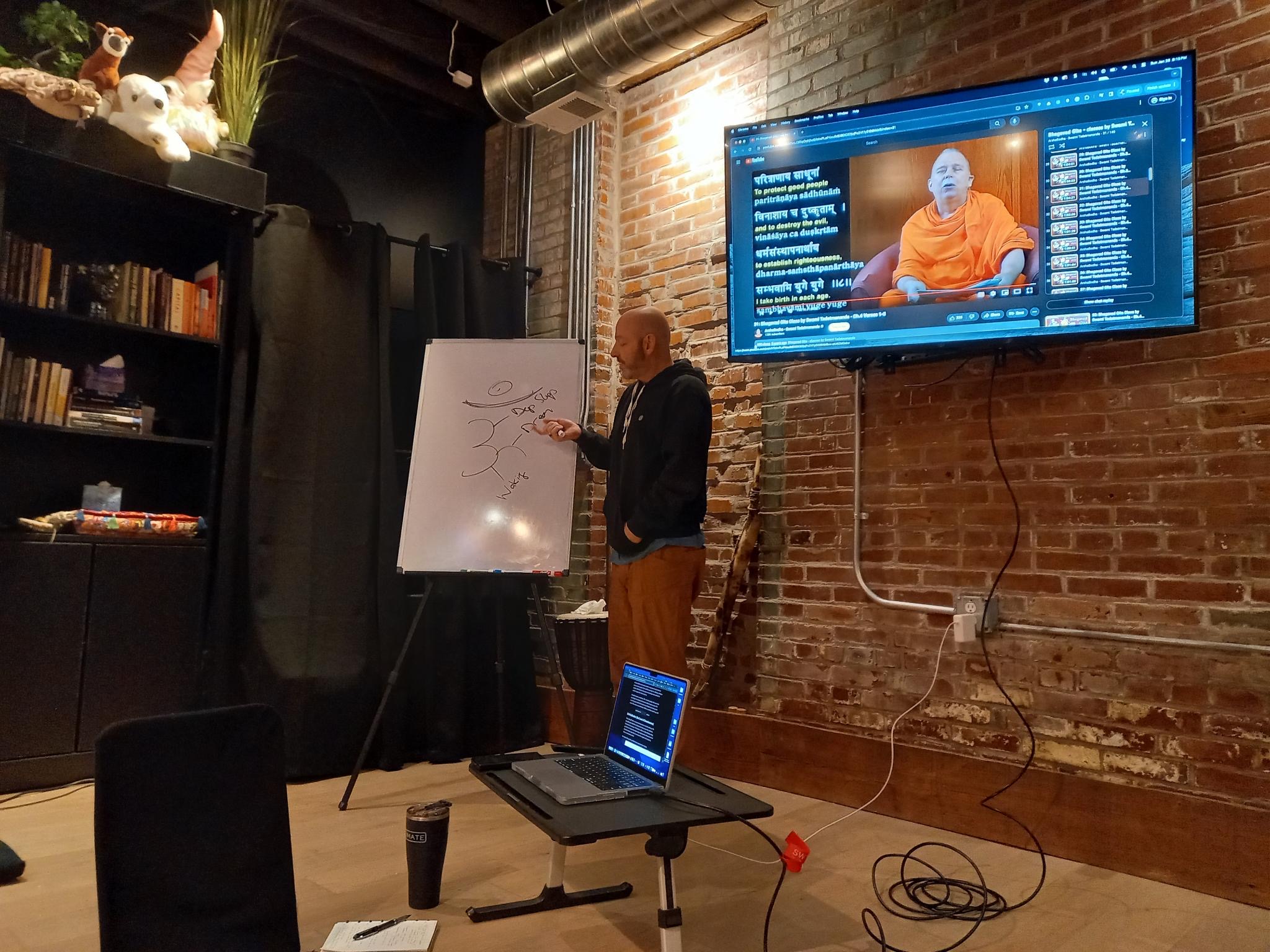
A practical way I study existence
I return to philosophy, religion, poetry, and art as a living reference library for the human experience.
I do not approach these traditions as abstract decoration or intellectual status symbols. I use them as tools for seeing. They help me name what I am feeling, understand why I am reacting, and choose my next step with more clarity.
Over time, this kind of study has helped me deepen my experience of life, reduce unnecessary frustration, and develop a steadier relationship with uncertainty, suffering, meaning, and responsibility.
I read across traditions to find enduring patterns: how to live well, how to face suffering, and how to make meaning.
How I use these sources day to day
- For perspective: zooming out from the immediate moment to see the larger arc of a situation.
- For ethics: grounding decisions in virtues like honesty, courage, restraint, compassion, and justice.
- For equanimity: remembering what I can control, and releasing what I cannot.
- For meaning: reconnecting effort and work to purpose, relationship, and service.
- For language: borrowing the precise words that poets and sages developed for inner life.
Some of my cross-tradition reading list
Hebrew wisdom literature
- The Bible (Proverbs and Ecclesiastes) — Proverbs offers clear, grounded guidance on character, honesty, justice, and the consequences of choices. Ecclesiastes adds a sober realism about ambition and control.
Hindu philosophy and devotion
- The Bhagavad Gita — A direct guide for moments of conflict and uncertainty. It frames life as a practice of right action, inner alignment, and devotion, even when outcomes are unclear.
- The Upanishads — Deep inquiry into self, consciousness, and the relationship between the individual and the universal.
- The Ashtavakra Gita — A radical non-dual perspective that loosens identification with anxiety, stories, and the shifting mind.
Taoism and the art of alignment
- The Tao Te Ching — It teaches softness, simplicity, and timing. When I am pushing too hard, it reminds me that harmony often comes from alignment, not force.
Greek virtue ethics and Stoicism
- The Nicomachean Ethics (Aristotle) — A practical framework for becoming the kind of person who can live well. Virtue as habit and excellence.
- Meditations (Marcus Aurelius) — A companion for self-regulation and calm. It repeatedly centers attention on what is within one’s control.
- Epictetus’ Discourses and Seneca’s Letters from a Stoic — Direct instructions for living with adversity and keeping values intact.
Buddhism and mind training
- Dhammapada — Clear guidance on mindfulness, ethics, and the causes of suffering.
Poetry and the emotional dimension of truth
- Rumi’s poetry — A language of love, longing, and union that speaks directly to the heart.
- The Prophet (Kahlil Gibran) — Gentle, memorable reflections on love, work, freedom, grief, and community.
- Letters to a Young Poet (Rilke) — A guide to inner patience and creative sincerity.
Strategy as philosophy
- The Book of Five Rings (Miyamoto Musashi) — Strategy as a mirror for life. Presence, simplicity, and mastery through practice.
- The I Ching — A philosophy of change that encourages humility and attentiveness to context.
What this gives me
- A deeper sense of meaning.
- A calmer relationship with uncertainty.
- More compassion for myself and other people.
- Less frustration, because I stop expecting life to be simple.