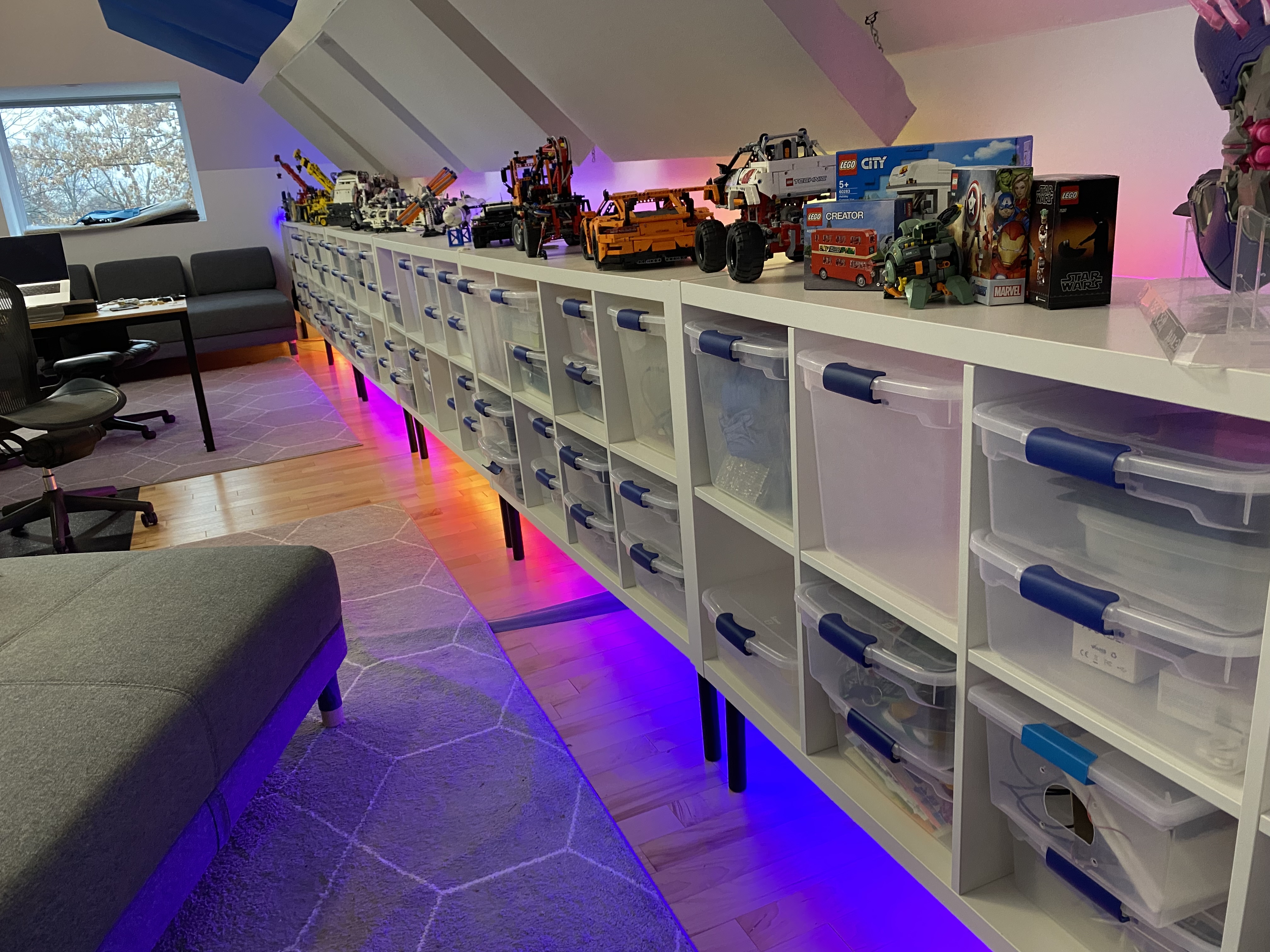
Kitchen LED Lights
The third room in the Magnolia LED rollout, introducing physical constraints around heat, grease, and the need for actually useful task lighting.
LED Lighting Projects
A collection of LED builds spanning room lighting, wearables, and portable displays — the same individually addressable technology applied across very different physical and operational constraints.
Individually addressable LEDs — WS2812b strips controlled by ESP8266/ESP32 microcontrollers running WLED firmware — are the common thread across these projects. The hardware and software stack is nearly identical in each case. What changes is context: a room has different constraints than a backpack, a backpack has different constraints than a full-body suit, and a bedroom has different constraints than a kitchen. Building the same technology into multiple form factors is the fastest way to understand which parts of a system are universal and which parts are entirely situational.
The third room in the Magnolia LED rollout, introducing physical constraints around heat, grease, and the need for actually useful task lighting.
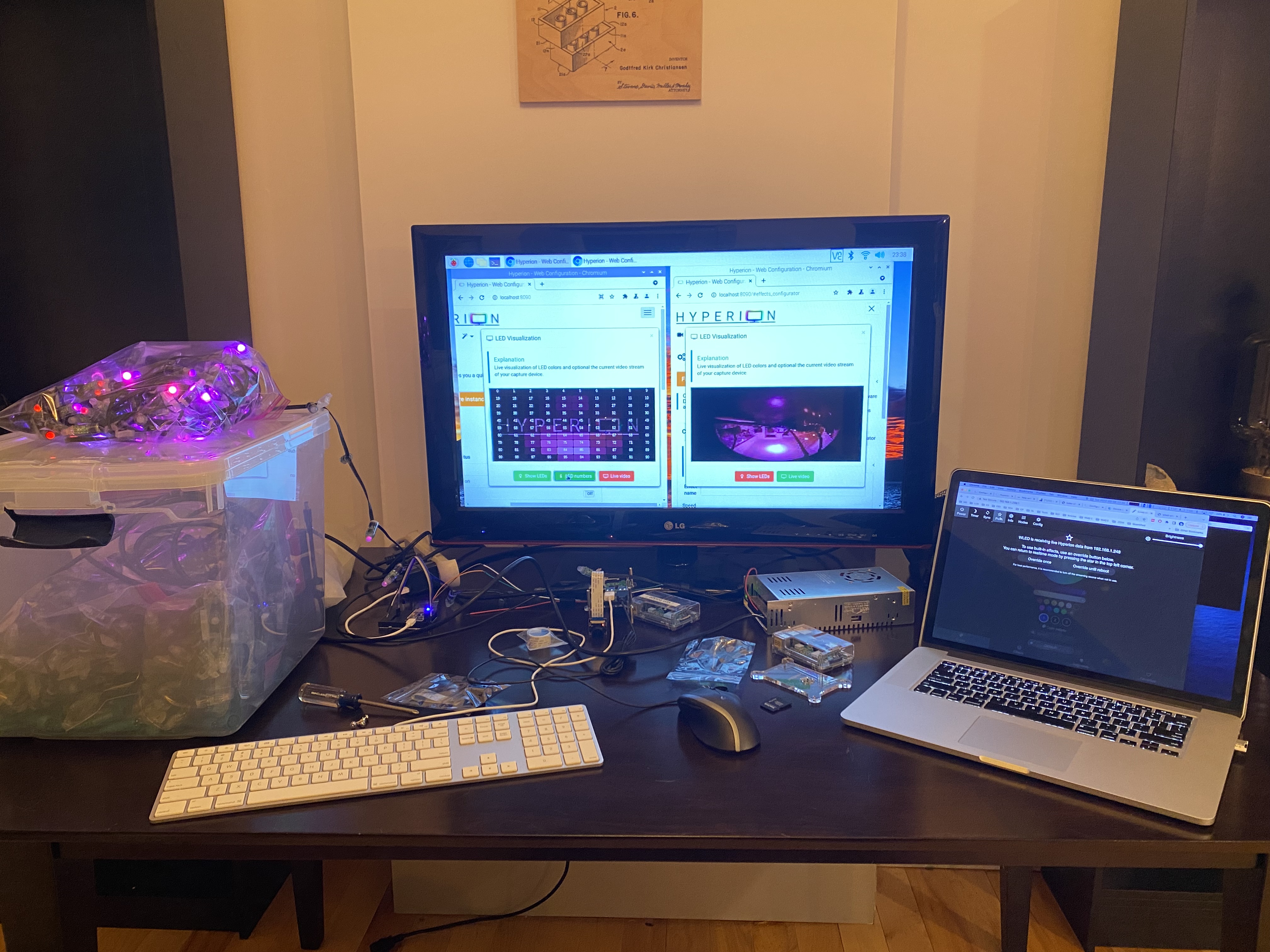
A portable, wearable LED display built into a backpack — same individually addressable technology as the house projects, but with battery power, outdoor visibility, and durability constraints.
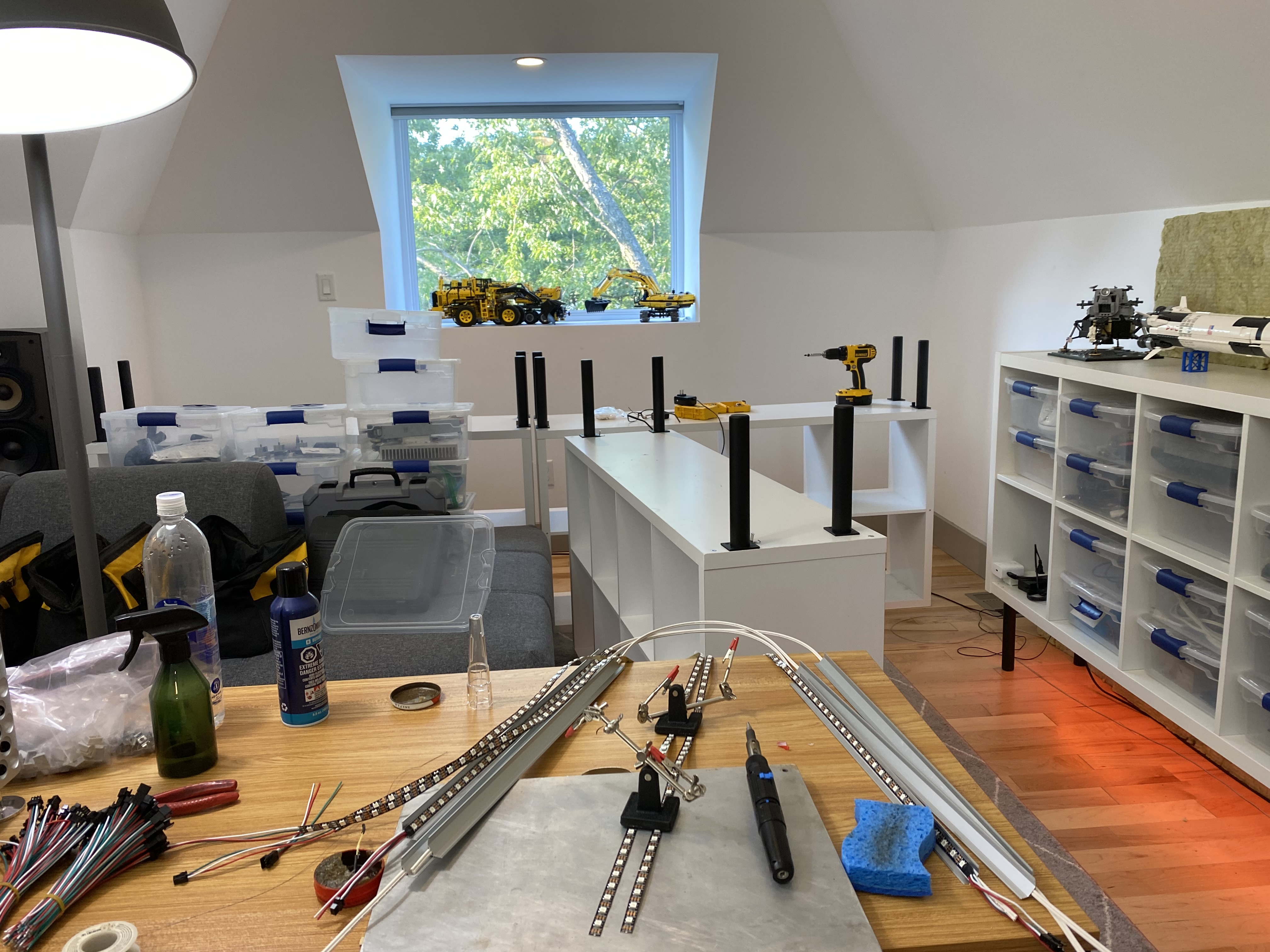
Soft baseboard lighting using the WLED ecosystem that shifts color temperature through the day — and revealed that bedroom smart lighting has near-zero tolerance for latency.
Individually addressable LED strips controlled by ESP8266/ESP32 running WLED, integrated with Apple HomeKit and Home Assistant to respond to time of day, calendar events, and sensor data.
A full-body wearable LED suit — programmable, camera-equipped, and built entirely by hand — that taught more about power budgets, wearable ergonomics, and heat dissipation than any datasheet.