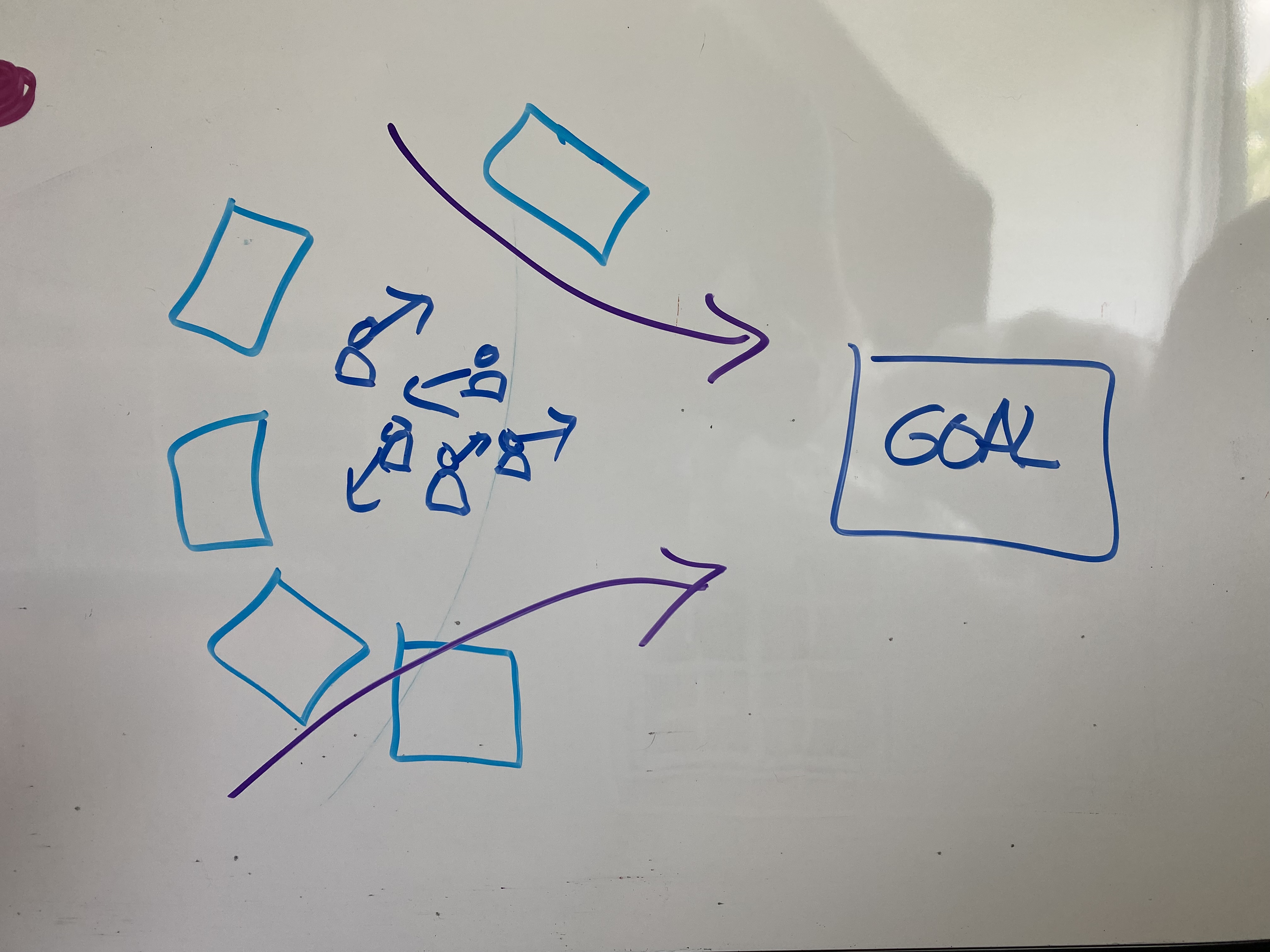
Most people do not struggle because they lack effort. They struggle because the structure around their work is incoherent.
A project has one name in Slack, another in Jira, another in Confluence, and a different shape again in Google Drive, email, calendars, and folders. Over time, that drift creates confusion about what belongs where, who is involved, and which system is supposed to hold the truth.
That is the problem Topic Focused Workflow, or TFW, is meant to solve.
What Topic Focused Workflow Is
Topic Focused Workflow is a simple operating pattern:
Define the topic first. Then make the tools reflect that topic consistently.
A topic might be:
- a venture
- a team
- an initiative
- an operating function
- a responsibility area
- a household system
- a long-running personal priority
The point is not to create more structure for its own sake. The point is to make reality more legible.
If a topic matters enough to deserve ongoing work, collaboration, or accountability, it should have a clear identity. That identity should show up consistently in the systems that support it.
Why This Matters
When tools are allowed to define structure independently, fragmentation creeps in quickly.
One system becomes the place where work is tracked. Another becomes the place where people talk. Another becomes the place where files go. Another becomes the place where decisions are documented. That is normal. The problem begins when those systems stop mapping cleanly to the same real-world topic.
Once that happens, people spend more energy answering questions like these:
- Where does this belong?
- Who owns this?
- Which space should we use?
- Is this active work or durable knowledge?
- Is this discussion, documentation, or a task?
That friction adds up. It increases mental load, slows collaboration, and makes it harder to keep commitments reliably.
The Core Principle
In TFW, the topic is the anchor and the tools are the surfaces.
That means a meaningful topic may have a corresponding:
- Confluence page area or space
- Jira project, board, or queue
- Slack channel or channel set
- Google Drive folder root
- calendar
- email group
- reporting area
- physical folder, room, or cabinet
Not every topic needs every representation. But whatever does exist should clearly map back to the same thing.
Consistency matters more than tool choice.
What TFW Changes
A good Topic Focused Workflow reduces ambiguity in four ways.
1. It clarifies boundaries
When a topic is named clearly and scoped intentionally, it becomes easier to tell what belongs inside it and what does not.
2. It lowers memory burden
People should not have to carry the entire structure of their responsibilities in their heads. Better environments reduce the need for heroic memory.
3. It creates shared expectations
When a team uses a consistent topic model, people can find history faster, understand participation more easily, and know which spaces are meant for conversation, tasks, documents, or files.
4. It supports scale without chaos
As responsibilities grow, “try harder” stops being a serious operating model. Better structure is part of how complexity becomes sustainable.
How I Think About Applying It
The practical rules are not complicated.
Use the most specific valid topic
If something belongs to a specific initiative within a venture, it should usually live there rather than in a broad catch-all bucket.
Keep naming consistent across systems
One real thing should not have five slightly different names depending on which tool you happen to be in.
Keep hierarchies shallow
Deep nesting makes systems harder to browse and maintain. Clear, shallow topic structures are usually easier for both humans and automation.
Separate conversation from source of truth
Chat is not the same thing as documentation. A task tracker is not the same thing as a knowledge base. A file store is not the same thing as a decision log.
Define participants and access clearly
Every topic carries expectations about who is involved, who can see what, and who is responsible for maintaining the space.
This Is Not Just For Work
One reason I like TFW is that it applies just as well to personal life as it does to organizations.
A health effort is a topic. A household operating system is a topic. A relationship support structure can be a topic. A long-term creative project is a topic. The same pattern works in each case:
- name it clearly
- define its scope
- identify participants
- choose the right supporting spaces
- keep the structure consistent
A surprising amount of overwhelm comes from mixed boundaries, not just from too much volume.
Why I Think It Helps
Topic Focused Workflow does not solve every operational problem. It does something more basic and more valuable: it makes commitments easier to see, support, and sustain.
When people can tell what a topic is, where it lives, how it is represented, and what kind of activity belongs there, the whole system becomes easier to trust.
That trust matters. It affects responsiveness, accountability, collaboration quality, and the ability to scale without turning everything into one undifferentiated pile.
The Short Version
Choose the topic.
Name it clearly.
Make the tools align to it.
Let the structure carry more of the burden.