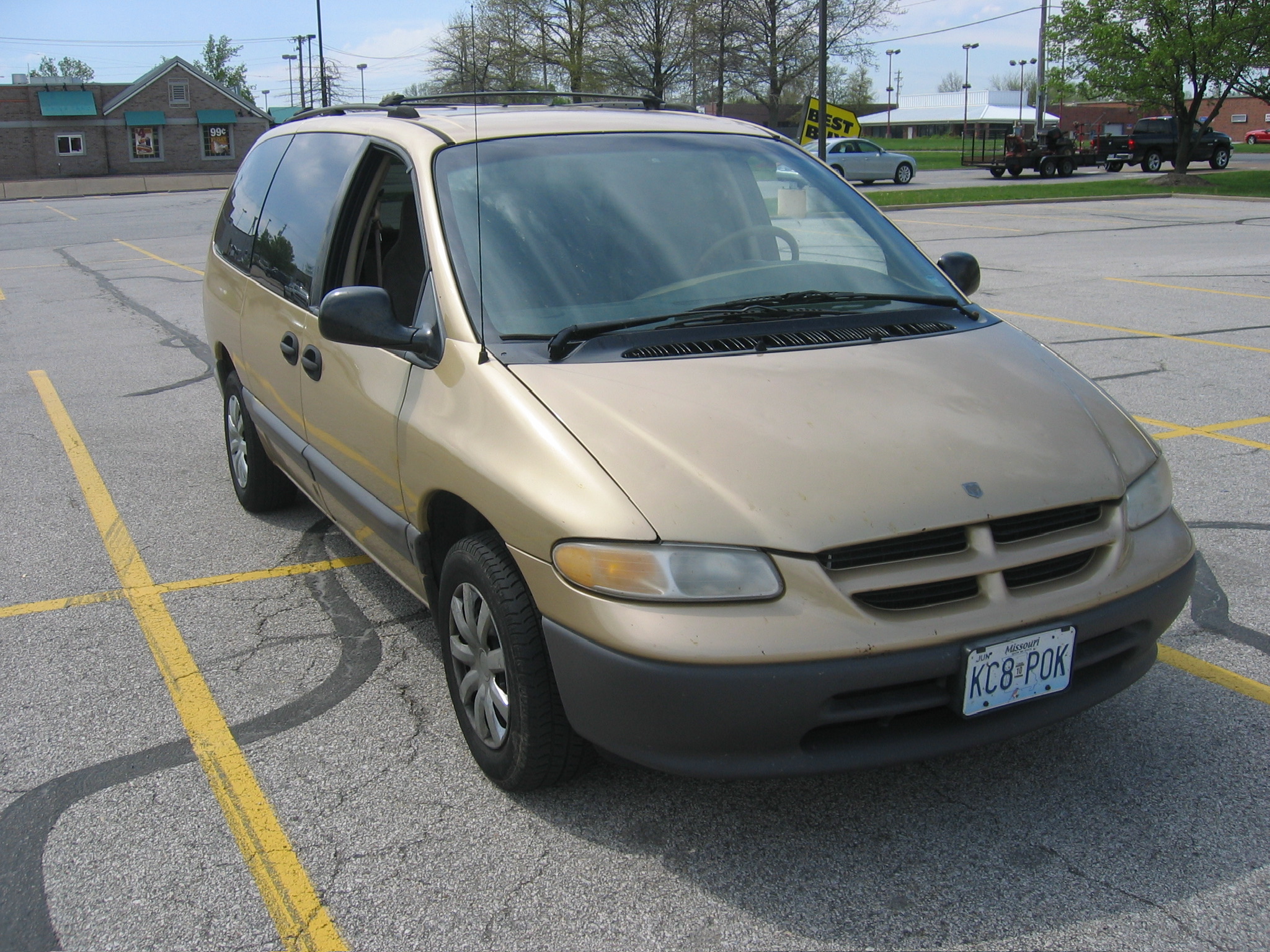
About a year after I bought my 2019 Dodge Grand Caravan, I ran into a problem that looked simple on the surface and turned out to be a real systems failure.
The battery would randomly die.
No pattern. No warning. Sometimes it would sit for a couple days and be fine. Other times it wouldn’t start the next morning.
The dealership replaced the battery. $500. Didn’t fix it.
At that point, most people either accept it, keep a jump pack in the car, or start replacing parts based on guesses. I couldn’t leave it there.
So I treated it like a system problem.
First step: measure everything. I installed a battery monitor that logged voltage continuously and pushed it to my phone. That showed me the battery wasn’t just failing—it was being drained slowly, then collapsing quickly once it got low.
Next: measure current directly. I hooked up an ammeter to the battery and saw a 1.5 amp draw when the car was “off.” That’s not a small leak—that will kill a battery overnight. A normal resting draw should be closer to 0.01–0.05 amps.
So something in the car wasn’t turning off.
From there, I started isolating. Pulled fuses one by one, watching the current drop. Eventually narrowed it to the radio circuit.
That didn’t make sense at first. The issue started months after installing an aftermarket JVC stereo, and there was no obvious connection. But once I had a repeatable test, I could prove it.
I disconnected the head unit. The problem stayed. I disconnected the adapter between the car and the radio. The problem disappeared.
That adapter is required. It translates the car’s CAN bus signals into something the radio understands—ignition, reverse, amplifier control, all of it. Without it, the system doesn’t function.
So now I had a situation where:
- The adapter was necessary
- The adapter was causing a 1.5 amp drain
- Two separate units behaved identically
- The manufacturer said it wasn’t their problem
- The installer said it was fine
- The dealership never looked at it
At this point, the only path forward was to stop trusting assumptions and look at how the system actually behaved.
The adapter was preventing the car from fully powering down.
So instead of trying to “fix” the adapter, I changed how it received power.
I rerouted its power source from constant battery power to an ignition-switched line (the auxiliary outlet). That means when the car turns off, the adapter physically loses power—no ambiguity, no reliance on software or CAN signals.
Result:
- Current draw dropped from 1.5 amps to ~0.02 amps
- Battery drain disappeared completely
- System still functions normally when the car is on
The actual fix was a short piece of wire.
But getting there required:
- Instrumenting the system
- Reducing the time to reproduce the problem
- Systematically eliminating variables
- Understanding how each component interacts with the rest
What stands out to me is not the fix—it’s how inaccessible this kind of problem is for most people.
Nothing about it was obvious:
- The issue appeared months after the change that caused it
- The failure mode looked like a battery problem
- The responsible component was buried behind multiple layers of abstraction
- Every “expert” along the way gave a different, incorrect answer
Without the ability to measure, isolate, and reason through the system, this likely ends with a permanently unreliable vehicle—or a series of expensive, unnecessary repairs.
These are the kinds of problems I tend to work on.
Not broken parts. Broken systems.
Where everything appears to be functioning individually, but the interaction between components creates failure. And the only way through is to understand the whole system deeply enough to force it into a correct state.
In this case, that meant turning a $20,000 vehicle that intermittently didn’t start into one that behaves exactly as expected—using a fix that costs less than a dollar.
And more importantly, knowing exactly why it works.